





If you are comparing a mechatronic integration supplier for a custom automation project, the real question is not “Who can build the machine?” It is “Who can build the machine that will still run, scale, and stay supportable after handover?” A supplier may look strong in a proposal, but technical evaluators usually need deeper evidence: controls capability, mechanical design discipline, component selection logic, documentation quality, commissioning process, and the ability to support failure analysis later. That is where good supplier selection usually succeeds or fails.
A short answer is this: choose the supplier that can explain engineering decisions clearly, show relevant project experience, manage interfaces between mechanics, controls, pneumatics, hydraulics, and motion systems, and support the full lifecycle after installation. Price matters, but integration risk usually costs more than the initial quote.
What you are really evaluating
Many teams still assess automation partners as if they were only machine builders or panel shops. That is too narrow. A capable mechatronic integration supplier is not just assembling hardware. They are responsible for making different subsystems behave as one stable production asset.
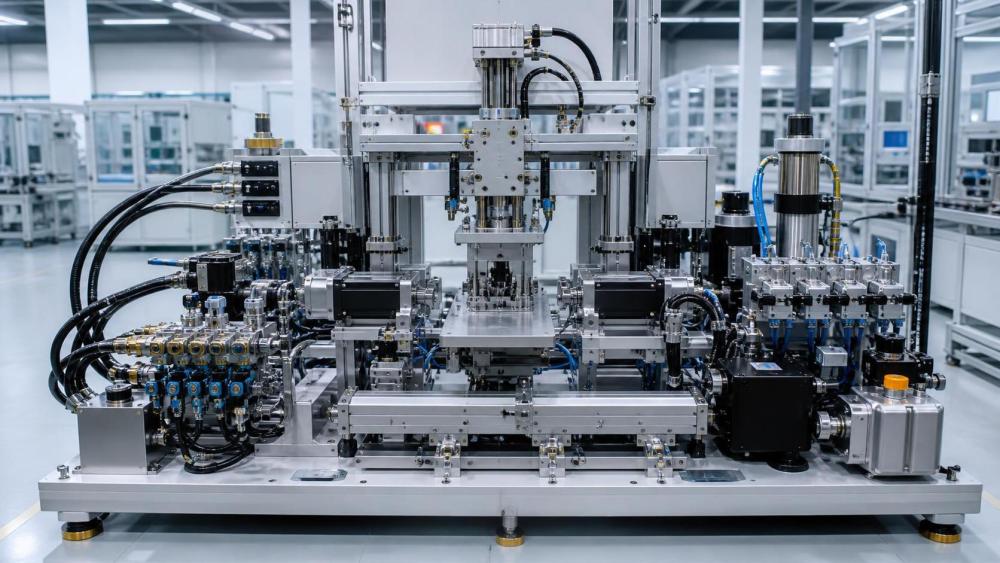
In custom automation, the failure point is often not the individual bearing, actuator, servo drive, seal, chain, or sensor. It is the interface between them. A linear axis may be correctly sized, but backlash from the transmission system creates positioning drift. A pneumatic gripper may cycle fast enough, but contamination or seal wear causes inconsistent force. A hydraulic unit may deliver pressure, yet heat management and control response are poor under real duty cycles. Integration quality shows up in those details.
That is why technical evaluation should focus less on brochure capability and more on systems thinking.
Start with application fit, not supplier reputation
A supplier can be excellent in one type of automation and still be the wrong fit for yours. The first filter should be application match.
Ask what percentage of their work is close to your project in process type, precision level, production environment, and uptime expectation. Packaging automation, semiconductor handling, heavy material transfer, precision assembly, and test rigs all demand different design instincts. A team that is very comfortable with robust handling cells may struggle with micron-level repeatability, contamination control, or thermal stability. The reverse is also true.
It helps to look at the project through five operating conditions:
- Required accuracy and repeatability
- Cycle time and duty cycle
- Load characteristics, including shock or variable loads
- Environmental stress such as dust, washdown, chemicals, or temperature
- Maintenance access and expected service life
If a supplier cannot discuss these conditions in a structured way early on, that is a warning sign. Good integrators usually begin by clarifying constraints, not by rushing to a standard architecture.
Look for engineering depth across the full mechatronic stack
This is where technical evaluators often separate serious suppliers from presentation-driven ones.
You want to know whether the supplier has real internal capability in mechanical design, controls, electrical integration, motion tuning, safety logic, and component selection. Not every company needs to do everything in-house, but you should be clear about what is owned internally and what is outsourced. Excessive dependence on third parties can slow root-cause analysis and make change control messy.
Ask practical questions:
- Who sizes motors, actuators, transmissions, and structural members?
- Who is responsible for PLC architecture, HMI design, and fieldbus integration?
- Who validates functional safety requirements?
- Who owns FAT, SAT, and performance acceptance?
- Who supports debugging when mechanical and controls issues overlap?
A strong supplier can usually answer these without hiding behind generic language.
For projects involving bearings, couplings, belts, chains, pneumatic actuators, hydraulic cylinders, or sealing systems, the evaluation should also cover component-level judgment. A supplier does not need to manufacture these parts, but they should know how component selection affects vibration, wear, leakage, backlash, lubrication intervals, and total cost of ownership. In practice, this is where platforms like PCTS can be useful as a background reference, because technical evaluators often need a broader view of component reliability, MRO considerations, and supplier positioning across mechanical transmission and fluid power categories.
The design review tells you more than the sales meeting
One of the most reliable ways to evaluate a mechatronic integration supplier is to watch how they behave in a technical review. Sales presentations are polished by design. Design reviews expose habits.
Pay attention to whether they:
- Challenge vague specifications instead of accepting them blindly
- Identify interface risks between subsystems
- Explain tradeoffs between precision, speed, serviceability, and cost
- State assumptions clearly
- Flag unknowns that need testing
Good engineers do not promise certainty where the application still needs validation. If a supplier claims they can hit target cycle time, repeatability, uptime, and future flexibility without discussing payload variation, fixture stability, control latency, environmental effects, or maintenance practices, they are probably selling confidence rather than engineering.
A useful test is to ask for a sample design package from a completed project, with confidential information removed. Review the structure of the BOM, drawings, control narratives, I/O list, safety documentation, and spare parts recommendations. The quality of these documents often predicts the quality of startup and long-term support.
Compatibility matters more than brand names
Many buyers focus heavily on what brands the supplier uses for PLCs, servos, valves, or mechanical components. That matters, but not as much as architecture discipline.
A custom line can use top-tier hardware and still become difficult to maintain if the system is poorly integrated. The better question is whether the supplier designs for compatibility with your plant standards, service model, and expansion plans.
Check these points carefully:
- PLC, HMI, and motion platform alignment with your internal standards
- Spare parts availability in your operating regions
- Sensor, actuator, and drive communication compatibility
- Cybersecurity and remote access approach
- Ability to support future line extensions or recipe changes
This is especially important in global manufacturing environments. A machine that runs well in one plant but depends on difficult-to-source seals, specialty bearings, or region-specific control hardware may create avoidable MRO risk later.
Don’t ignore manufacturing and assembly discipline
Some integration projects fail for a simple reason: the design was acceptable, but build quality was inconsistent. Cable routing, panel labeling, alignment practices, torque control, contamination management, and testing standards all matter.
Technical evaluators should ask how the supplier controls assembly quality. Do they use documented work instructions? Is there inspection before debug? How do they handle revision control on drawings and firmware? What is their process for non-conformance and corrective action?
This is not bureaucracy for its own sake. In mechatronic systems, small assembly deviations can become recurring field issues. Misalignment increases bearing load. Poor sealing creates dust ingress. Inconsistent tubing practices cause pneumatic losses. Loose transmission components lead to vibration and positional instability. The supplier should understand these links and build accordingly.
Commissioning and support are part of the purchase decision
A supplier should never be judged only on delivery. Commissioning quality is where custom automation becomes productive or turns into a prolonged troubleshooting exercise.
Ask for their FAT and SAT structure. What exactly is tested before shipment? Which performance criteria are simulated, and which are proven only on site? How are punch-list items tracked? What training is included for operators and maintenance teams?
The strongest suppliers usually have a defined support model after startup. That includes remote diagnostics, response windows, spare parts recommendations, software backup procedures, and a clear path for engineering changes. If your project involves high-duty rotating or fluid-power components, post-installation support should also cover wear monitoring, lubrication practices, seal replacement intervals, and failure trend analysis where applicable.
This area gets overlooked because it appears “post-project,” but for technical evaluators it belongs in the selection phase. Once the system is installed, poor support is hard to fix contractually.
Watch for these common evaluation mistakes
One mistake is treating the lowest bid as the most efficient choice. In custom automation, a lower quote may simply mean lower engineering hours, lighter validation, or weaker documentation. That cost usually returns later as downtime, redesign, or delayed ramp-up.
Another mistake is overvaluing a polished reference list. References are useful, but they need to be relevant. A supplier with ten successful conveyor projects has not automatically proven they can deliver a precision motion platform with tight synchronization and traceability requirements.
A third mistake is skipping maintainability review. Some systems look elegant in CAD and become frustrating in real production because sensors are inaccessible, seals are difficult to replace, pneumatic manifolds are crowded, or transmission components require excessive disassembly for service. Maintenance teams often spot these issues faster than project teams, so involve them early.
A practical scoring approach for technical evaluators
If your team needs a cleaner decision process, score suppliers on weighted criteria instead of relying on general impressions. The exact weighting depends on the project, but the categories below usually work well:
- Application relevance and past project similarity
- Mechanical and controls engineering capability
- Component selection logic and lifecycle thinking
- Documentation quality and change control
- Manufacturing and quality assurance process
- Commissioning readiness and acceptance testing
- After-sales support and spare parts strategy
- Commercial clarity, including scope boundaries and assumptions
The point of scoring is not to create fake precision. It is to make tradeoffs visible. A supplier with a higher price may still rank better if they reduce commissioning risk, simplify maintenance, and fit your standards more closely.
When a supplier is probably not the right choice
Walk away if the supplier avoids detailed technical discussions, keeps changing ownership of responsibilities, cannot explain how they manage subsystem interfaces, or refuses to define acceptance criteria clearly.
Be cautious as well if they push a standard platform into a process that obviously needs custom engineering. Standardization can be smart, but only when it matches the application. Forced standardization often creates workarounds that hurt reliability later.
The same applies if they treat component choice as an afterthought. In demanding automation, the details of bearings, guides, seals, couplings, fluid power components, and condition monitoring can affect stability and service life more than many buyers expect.
Final decision: choose the supplier you can debug with
That may sound blunt, but it is often the most honest test. A custom automation project will face unknowns. Sensors drift. Loads vary. Operators use equipment differently than expected. Commissioning reveals interactions that were invisible in concept review. When that happens, the best mechatronic integration supplier is the one with the technical depth, documentation discipline, and working style to solve problems without losing control of the project.
For technical evaluators, that usually means selecting a partner who can connect component reliability, controls behavior, serviceability, and total lifecycle cost into one coherent system. If you are still narrowing options, start by validating engineering ownership, interface management, and support readiness before comparing price in detail. That sequence leads to better decisions far more often than the reverse.
FAQ
How many suppliers should be shortlisted for a custom automation project?
Usually two to four is enough. More than that often creates comparison noise unless the project is unusually large or technically novel.
Is it a problem if the supplier outsources part of the engineering?
Not automatically. The issue is whether responsibilities, review control, and technical accountability are still clear. Hidden outsourcing creates risk.
Should technical evaluators insist on specific component brands?
Only where plant standards, compliance, spare parts strategy, or reliability history justify it. Brand preference without system-level reasoning can limit better options.
What is the biggest red flag in supplier evaluation?
Confidence without technical specificity. If a supplier gives strong promises but weak engineering detail, the risk is high.
Image Placeholder List
Suggested placement: after the section discussing engineering depth across the mechatronic stack
Suggested image content: a simplified custom automation system diagram showing mechanics, motion control, pneumatics, hydraulics, sensing, and maintenance interfaces
Suggested alt text: mechatronic integration supplier evaluation across mechanics controls fluid power and component interfaces
Internal Link Anchor Text Suggestions
- industrial bearing selection for automation equipment: component selection guide or technical resource page
- how pneumatic actuators affect cycle time and maintenance: application analysis page
- power transmission components in custom machinery: category or knowledge hub page
- industrial sealing solutions for contamination control: technical comparison page
- MRO planning for automation systems: maintenance and lifecycle cost page
External Authority Source Suggestions
- industrial automation standards organizations and machine safety guidance
- brand official technical documentation for PLC, servo, actuator, bearing, and sealing components
- engineering association or academic research materials on reliability, motion control, and maintenance economics
Want to dive deeper into these market dynamics, or need data-driven support for your next business move? Drop a line below and let the analysts at PCTS provide customized insights.
We respect your privacy. Your information is strictly confidential.
Related News
- 00
0000-00
How to check vibration analysis software for sensor compatibility - 00
0000-00
IndexBox Forecasts 3.8% Annual Growth for Global Radial Seals Market Through 2035 - 00
0000-00
How to assess the chemical compatibility of FFKM sealing sheets - 00
0000-00
IndexBox Forecasts 3.6% Annual Growth for Construction Bearings Market - 00
0000-00
When do hydraulic components require an export license?
Weekly Insights
Stay ahead with our curated technology reports delivered every Monday.