





How to Evaluate a Metallurgy Belts Supplier for Service Life and Downtime Risk
Choosing the right metallurgy belts supplier is not just about price. It shapes belt life, shutdown frequency, maintenance effort, and production stability across demanding industrial lines.
In steel, sintering, coking, rolling, and bulk handling systems, belts work under heat, dust, shock loads, and abrasive material flow. Small supplier gaps often become large operating losses.
That is why a procurement review should focus on service life and downtime risk first. Unit price matters, but total cost matters more over the full replacement cycle.
A capable metallurgy belts supplier should prove material performance, process consistency, application knowledge, and responsive support. The goal is not just buying belts. It is protecting uptime.
Start with the Real Operating Conditions
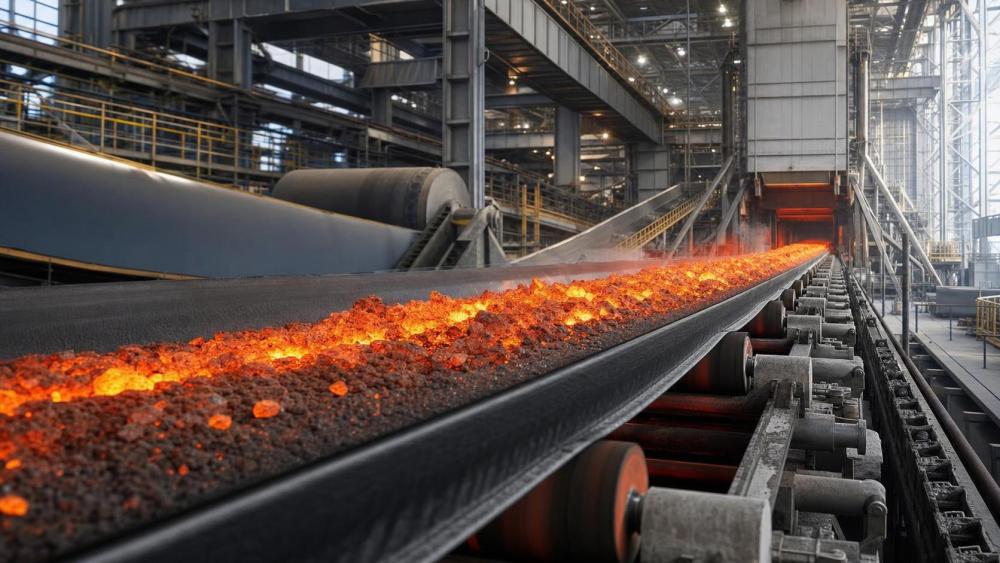
Before comparing any metallurgy belts supplier, define the actual duty conditions. Many supplier failures begin with incomplete application data during the RFQ stage.
Document operating temperature, conveyed material, particle size, belt speed, pulley diameter, tension range, humidity, dust level, and expected shift hours. These details drive design suitability.
In metallurgy applications, the heat profile matters especially. A belt that performs well at average temperature may still fail early during frequent hot-load spikes.
A serious metallurgy belts supplier will ask detailed questions. If the response is generic, there is a good chance the recommendation is based on catalog matching, not engineering judgment.
- What is the continuous and peak operating temperature?
- Is the belt exposed to oils, scale, chemicals, or water spray?
- How often do impact loads or jam events occur?
- What service life is currently achieved in the field?
This first step creates a clean baseline. It also helps separate a true metallurgy belts supplier from a trading company with limited technical depth.
Check Material System and Belt Construction
Service life depends heavily on compound formulation and belt structure. In practice, cover rubber, carcass design, adhesion strength, and splice integrity often decide real performance.
Ask each metallurgy belts supplier to explain the belt build in plain technical terms. The answer should connect materials directly to your operating risk.
For hot material handling, heat resistance standards alone are not enough. You need evidence on aging resistance, crack behavior, hardness retention, and dimensional stability over time.
For abrasive ore or sinter fines, focus on wear rate, cut resistance, and edge durability. For inclined conveying, friction coefficient and surface pattern become more important.
A reliable metallurgy belts supplier should provide test data, not only broad claims such as heavy duty, premium quality, or long life.
- Heat resistance grade and test method
- Abrasion loss results
- Tensile strength and elongation data
- Adhesion between plies and covers
- Expected splice performance
When test values look acceptable, ask one more question. Are these routine production results or type-test results from a sample prepared under ideal conditions?
Evaluate Manufacturing Consistency, Not Just Capability
Many suppliers can make a good sample. Fewer can deliver the same quality every batch. For procurement, consistency is often the bigger risk factor.
Ask the metallurgy belts supplier about mixing control, curing parameters, inspection points, traceability, and nonconformance handling. Good systems lower variance before it reaches your site.
A mature supplier should track raw material lots, process records, and final inspection history. If a failure appears, root cause analysis should be fast and evidence-based.
This matters because unexpected downtime rarely comes from one dramatic defect. More often, it starts with gradual variation in compound quality or bond strength.
Useful audit questions include the following:
- What critical parameters are monitored during production?
- How is each belt traced back to raw material lots?
- What is the internal rejection rate for similar products?
- How are corrective actions verified after a complaint?
If possible, request records from belts made for comparable metallurgy duty. A metallurgy belts supplier with stable process control should be comfortable sharing structured quality evidence.
Look for Application Experience in Metallurgy Lines
Industry experience reduces trial-and-error. A metallurgy belts supplier that understands furnace charging, slag handling, sinter transfer, and rolling support systems can spot risk earlier.
Ask for references by process type, not just by customer name. Similar application cases are more useful than broad claims about serving steel plants worldwide.
The stronger signal is whether the supplier can discuss failure modes clearly. For example, they should distinguish heat hardening, cover glazing, edge fray, carcass fatigue, and splice separation.
That also means the supplier can recommend practical changes beyond the belt itself. Better skirt design, improved pulley lagging, and tension correction can extend life materially.
In real procurement work, this broader view is valuable. It lowers downtime risk because the metallurgy belts supplier is helping solve system causes, not only replacing parts.
Compare Service, Lead Time, and Failure Response
A belt with good specifications can still create losses if delivery is slow or failure response is weak. Downtime exposure is a supply-chain issue as much as a material issue.
When reviewing a metallurgy belts supplier, measure support speed in concrete terms. General promises about full service are not enough for high-load industrial operations.
A dependable metallurgy belts supplier should define escalation contacts, reporting timelines, and warranty handling. Fast communication often prevents a minor issue from becoming a major shutdown.
Use Total Cost, Not Purchase Price, as the Main Decision Lens
From a cost perspective, the cheapest offer can be the most expensive decision. Belt replacement labor, lost output, emergency freight, and collateral damage often exceed purchase value quickly.
A better method is to compare each metallurgy belts supplier using total cost of ownership over a defined operating period. That makes service life visible in financial terms.
Build a simple decision model with these inputs:
- Unit price per belt
- Expected months of service life
- Planned replacement labor cost
- Cost of one unplanned stoppage
- Probability of emergency replacement
- Spare inventory requirement
This approach usually changes supplier rankings. A metallurgy belts supplier with a higher initial quote may still deliver lower annual cost and better production predictability.
More importantly, it gives procurement a stronger internal case. Decisions become easier to defend when they are tied to uptime economics instead of only quote comparison.
Create a Practical Supplier Evaluation Scorecard
To keep decisions consistent, use a weighted scorecard. This helps compare each metallurgy belts supplier on the factors that really affect service life and downtime risk.
A balanced scorecard can include product performance, quality control, metallurgy application experience, technical support, lead time, and total cost.
One practical weighting model is shown below:
- Material and belt construction: 25%
- Manufacturing consistency and traceability: 20%
- Metallurgy application references: 20%
- Service response and logistics: 15%
- Total cost of ownership: 20%
This kind of structure keeps evaluation grounded. It also helps prevent a metallurgy belts supplier from winning purely through aggressive pricing and polished sales language.
Final Decision: Buy Reliability, Not Just Belts
The best metallurgy belts supplier is the one that lowers uncertainty across the whole operating cycle. That includes specification accuracy, quality stability, support speed, and predictable field life.
In current industrial markets, that difference is becoming more visible. Plants are under pressure to run longer, reduce maintenance waste, and avoid disruptive emergency stops.
So the evaluation standard should be simple. Can this metallurgy belts supplier prove lower downtime risk with evidence, process control, and metallurgy-specific support?
If the answer is yes, the purchase decision becomes stronger and more economical over time. That is how procurement turns belt sourcing into a reliability advantage.
Related News
- 00
0000-00
Where are axial piston pumps used in mining equipment? - 00
0000-00
Embodied AI Robotics and Drive Control Forum Held in Shanghai - 00
0000-00
How does seal service life affect the total cost of ownership? - 00
0000-00
Schaeffler to Cut 3,460 Jobs and Close Five European Plants - 00
0000-00
How does system size affect the price of a belt drive system?
Weekly Insights
Stay ahead with our curated technology reports delivered every Monday.