





Choosing low backlash power transmission systems matters when motion quality defines machine value. In indexing tables, servo axes, packaging lines, robotics, and precision handling, small amounts of lost motion can become positioning errors, unstable cycle times, and premature wear.
The real decision is rarely about backlash alone. A workable selection also depends on torsional stiffness, torque peaks, bearing support, duty cycle, lubrication strategy, mounting accuracy, and service conditions across the full drive train.
That is why low backlash power transmission systems are receiving closer attention across industrial equipment. The same evaluation now connects mechanics, controls, maintenance economics, and supplier reliability rather than a single catalog number.
What Low Backlash Really Means in Precision Motion
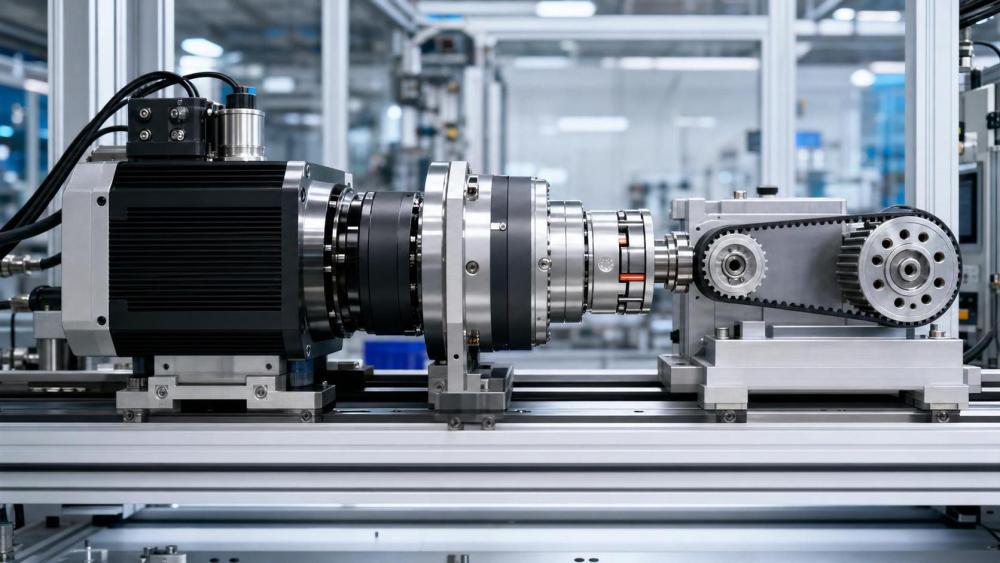
Backlash is the angular or linear play between mating components when direction changes. In practical terms, it is the dead zone before output motion follows input motion.
Low backlash power transmission systems are designed to minimize that dead zone. Common examples include precision gearboxes, servo couplings, toothed belt drives, preloaded rack and pinion sets, and carefully matched bearing-supported assemblies.
Still, zero backlash on paper does not guarantee precision in use. Elastic deformation, thermal growth, shaft misalignment, and bearing clearance can add motion error even when the transmission element looks ideal in a datasheet.
This is especially relevant in systems where bearings, seals, couplings, belts, chains, and lubrication conditions interact. Precision motion is a system result, not an isolated component property.
Why the Topic Deserves More Attention Now
Industrial equipment is being pushed toward tighter tolerances and higher throughput at the same time. That combination exposes weak points in conventional drive arrangements very quickly.
Servo-driven automation is one reason. Faster reversals, shorter settling times, and finer interpolation make backlash easier to detect and more expensive to ignore.
Condition monitoring is another reason. Vibration signatures, torque fluctuation, and repeatability drift now reveal transmission quality issues earlier, which changes how components are compared and approved.
Across the broader precision components market, platforms such as PCTS reflect this shift by linking transmission choice with bearings, sealing, lubrication, maintenance planning, and lifecycle cost. That wider view is closer to how machines actually behave.
The Main System Types and Where They Fit
Not every low backlash design solves the same problem. Selection becomes clearer when each option is tied to motion behavior, load profile, and installation limits.
In many cases, the better answer is not the lowest nominal backlash. It is the option with the most stable accuracy under real torque, temperature, speed, and maintenance conditions.
Key Evaluation Factors Beyond the Catalog Number
The first check is backlash under load direction reversal. Ask how the value was measured, under what torque, and whether it changes after running time.
Torsional stiffness often matters just as much. A system with low static backlash but poor stiffness may still create servo lag, overshoot, and settling problems.
Peak torque, not only rated torque, deserves close review. Frequent acceleration, emergency stops, and shock events can damage tooth contact surfaces and enlarge effective backlash over time.
Support bearings are another decisive factor. Bearing preload, radial capacity, lubrication regime, and contamination resistance influence how long low backlash power transmission systems stay precise after commissioning.
Seals and lubrication should not be treated as background details. In dusty, wet, chemical, or high-temperature settings, seal failure often leads to backlash growth faster than gear wear alone.
- Check backlash, stiffness, efficiency, and torque using the same operating assumptions.
- Review thermal limits at maximum speed and peak duty cycle.
- Confirm shaft interface tolerances, keying, clamping, and concentricity requirements.
- Compare lubrication intervals with actual maintenance access.
- Ask whether wear progression data is available, not just initial performance values.
Where Selection Errors Usually Appear
One common mistake is choosing low backlash power transmission systems only by advertised arc-minutes. That narrows the decision too early and hides the importance of stiffness, load path, and mounting discipline.
Another mistake is ignoring the full chain of error sources. Motor encoder resolution, structural compliance, bearing arrangement, and coupling misalignment can erase the benefit of a premium gearbox.
Belt systems are often underestimated in precision applications. With correct tooth profile, pretension, pulley quality, and environmental protection, they can outperform poorly integrated gear solutions in some motion profiles.
Serviceability also gets overlooked. If replacement requires major disassembly, downtime cost may exceed the savings from a lower purchase price within a short period.
A practical reading of application fit
Short, frequent reversals usually favor high stiffness and stable preload. Long travel axes may benefit more from system efficiency, thermal control, and easier alignment over distance.
In washdown or contaminated areas, sealing performance can outrank nominal backlash. A slightly higher initial value may be acceptable if accuracy remains stable through the maintenance interval.
How to Compare Suppliers and Validate Claims
A serious evaluation looks for consistency across technical data, manufacturing quality, and after-sales support. This is where broader market intelligence becomes useful.
PCTS-style analysis is valuable because it connects transmission components with bearings, seals, industrial MRO priorities, and reliability indicators. That helps separate impressive specifications from durable application performance.
Useful questions include measurement method, test load, bearing brand or grade, lubricant type, sealing arrangement, replacement cycle guidance, and field references in comparable equipment.
Turning Evaluation Into a Better Decision
The most effective way to choose low backlash power transmission systems is to start from motion requirements, then work outward to load cases, environment, maintenance reality, and supplier evidence.
A short comparison matrix usually helps. Include allowable backlash growth, torsional stiffness, peak torque margin, bearing support, sealing strategy, lubrication interval, and replacement complexity.
That approach creates a more realistic basis for comparing gearboxes, couplings, belts, and integrated assemblies. It also makes trade-offs visible before they become commissioning problems.
For the next step, refine the duty profile, define acceptable positional error over time, and review candidate systems against actual operating conditions rather than ideal lab values. That is usually where the right choice becomes clear.
Want to dive deeper into these market dynamics, or need data-driven support for your next business move? Drop a line below and let the analysts at PCTS provide customized insights.
We respect your privacy. Your information is strictly confidential.
Related News
- 00
0000-00
How sealing technology reduces contamination in semiconductor manufacturing - 00
0000-00
Where to install vibration sensors on rotating machinery - 00
0000-00
NTSB Probe Finds Boeing Warned of MD-11 Engine Bearing Risk Years Earlier - 00
0000-00
How to size pneumatic grippers for packaging system integration - 00
0000-00
How to size alloy steel power transmission chains for heavy loads
Weekly Insights
Stay ahead with our curated technology reports delivered every Monday.