





How to Choose Heavy Machinery Couplings for Torque, Misalignment, and Service Life
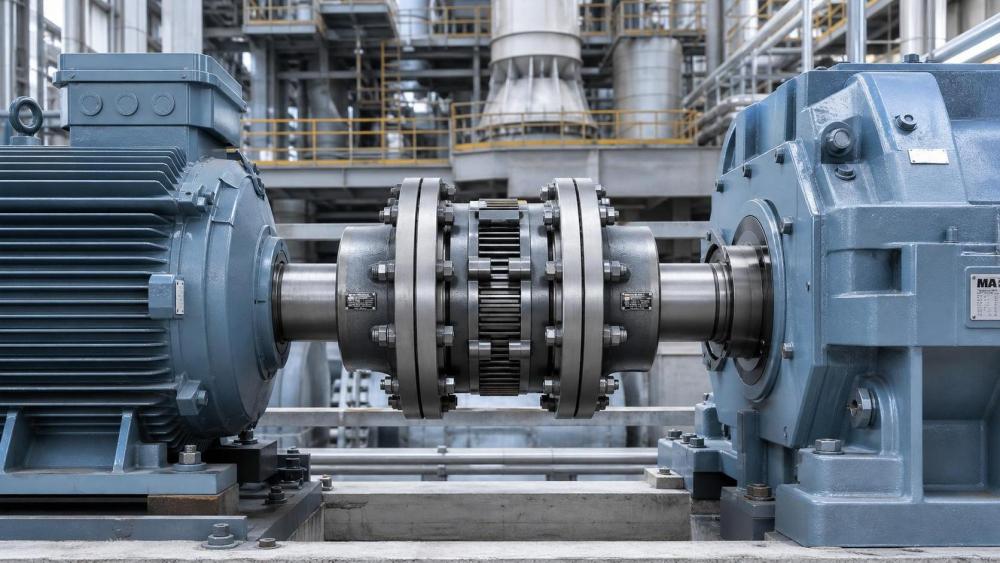
Choosing heavy machinery couplings is not only about matching torque ratings.
Technical decisions usually sit at the intersection of load, alignment, maintenance, and downtime risk.
A coupling that looks adequate on paper can still fail early in real service.
That is especially true in mining, steel, cement, ports, power generation, and bulk material handling.
In these environments, heavy machinery couplings absorb torque peaks, tolerate shaft movement, and protect connected equipment.
The right choice improves reliability, reduces unplanned shutdowns, and supports lower lifecycle cost.
This guide explains how to evaluate heavy machinery couplings with practical engineering and procurement logic.
Start with the real duty profile, not the catalog headline
The first mistake is selecting heavy machinery couplings by nominal torque alone.
Catalog values often assume stable operating conditions, good alignment, and controlled loads.
Actual systems rarely behave that cleanly.
Start by defining the real duty profile in measurable terms.
- Continuous torque and peak torque
- Start-stop frequency
- Shock load intensity
- Rotational speed range
- Direction reversals
- Ambient contamination, moisture, and temperature
This step changes the selection outcome more than most buyers expect.
For example, a crusher feeder and a conveyor may show similar motor power.
Their coupling requirements can still be very different because shock loading is different.
If the application has frequent starts or jam events, service factors deserve closer attention.
That also means heavy machinery couplings should be checked against transient conditions, not only steady-state operation.
Match coupling type to torque behavior and shaft misalignment
Different coupling designs solve different mechanical problems.
This is where many heavy machinery couplings are either overbuilt or misapplied.
Gear couplings
Gear couplings handle high torque density and work well in compact spaces.
They also tolerate moderate misalignment, but lubrication quality is critical.
Poor grease control often shortens service life faster than torque overload.
Grid couplings
Grid couplings are useful when vibration damping and shock absorption matter.
They are common in heavy drives where load variation is frequent.
Elastomeric couplings
Elastomeric heavy machinery couplings can absorb shock and need less lubrication attention.
However, temperature, chemicals, and torque spikes can age the element quickly.
Disc couplings
Disc couplings suit high-speed service and precise torque transmission.
They handle angular misalignment well, but they do not damp shock loads like elastomeric designs.
Chain couplings
Chain couplings are rugged and simple, but they are less attractive where precision and low maintenance are priorities.
The practical rule is straightforward.
Choose heavy machinery couplings based on the dominant failure driver in the application.
If torque peaks dominate, prioritize torque reserve and fatigue strength.
If alignment drift dominates, prioritize misalignment capacity and bearing protection.
If maintenance access is limited, simplify lubrication and replacement tasks.
Check all three misalignment modes before approval
Misalignment is one of the biggest reasons heavy machinery couplings wear out early.
Yet many evaluations still treat it as a single number.
That approach hides real risk.
A proper review should separate three modes.
- Angular misalignment between shaft centerlines
- Parallel offset between shafts
- Axial movement caused by thermal growth or float
These conditions often appear together in large equipment.
Base settling, frame distortion, thermal expansion, and bearing wear all contribute.
In actual service, alignment can also drift after installation.
That is why heavy machinery couplings should not be selected using installation alignment only.
Use expected operating misalignment, then apply a realistic safety margin.
When a supplier publishes a maximum value, confirm whether it is continuous or intermittent.
That detail affects service life more than the headline rating.
Evaluate service life through maintenance reality
Service life is not just a material question.
For heavy machinery couplings, service life depends on the maintenance system around them.
A robust design still performs poorly if greasing is inconsistent or inspections are delayed.
This is where selection should become operational, not theoretical.
Ask practical questions before approving any model.
- Can lubrication points be reached safely?
- Is element replacement possible without moving major equipment?
- Are seals strong enough for dust, slurry, or washdown conditions?
- Does the coupling need special tools or special training?
- Are spare parts globally available with stable lead times?
These questions often reveal the better choice between two similar products.
In remote sites, simpler heavy machinery couplings may produce longer effective service life.
That happens because maintenance execution is more reliable.
Compare options with a decision table
A simple comparison table helps keep selection discussions objective.
It also helps cross-functional teams align faster.
This kind of structure is useful when comparing heavy machinery couplings across different suppliers.
It also prevents price from dominating the decision too early.
Watch for common selection risks
Several patterns show up again and again in failed coupling projects.
Most are avoidable with better front-end evaluation.
- Using motor power as the only selection input
- Ignoring shock loads from process upsets
- Accepting maximum misalignment values without service-life context
- Overlooking contamination and sealing limits
- Choosing heavy machinery couplings that require maintenance the site cannot sustain
- Approving a design with weak spare parts support
From a procurement angle, these risks often appear after installation, not during bidding.
That is why cross-checking field conditions early is worth the effort.
A practical selection path for heavy machinery couplings
A reliable decision process does not need to be complicated.
It needs to be disciplined.
- Define operating torque, peak events, speed, and environment.
- Measure expected misalignment in operation, not only at installation.
- Shortlist coupling types that match the dominant mechanical risk.
- Review lubrication, sealing, and replacement practicality.
- Compare heavy machinery couplings using lifecycle cost, not unit price alone.
- Confirm spare parts access and technical support before final approval.
When this process is followed, coupling selection becomes more predictable.
It also becomes easier to justify internally.
The best heavy machinery couplings are rarely the cheapest or the strongest on paper.
They are the ones that fit the real load pattern, tolerate the real alignment condition, and survive the real maintenance routine.
That is the standard worth using when making the final decision.
Want to dive deeper into these market dynamics, or need data-driven support for your next business move? Drop a line below and let the analysts at PCTS provide customized insights.
We respect your privacy. Your information is strictly confidential.
Related News
- 00
0000-00
How to check vibration analysis software for sensor compatibility - 00
0000-00
IndexBox Forecasts 3.8% Annual Growth for Global Radial Seals Market Through 2035 - 00
0000-00
How to assess the chemical compatibility of FFKM sealing sheets - 00
0000-00
IndexBox Forecasts 3.6% Annual Growth for Construction Bearings Market - 00
0000-00
When do hydraulic components require an export license?
Weekly Insights
Stay ahead with our curated technology reports delivered every Monday.